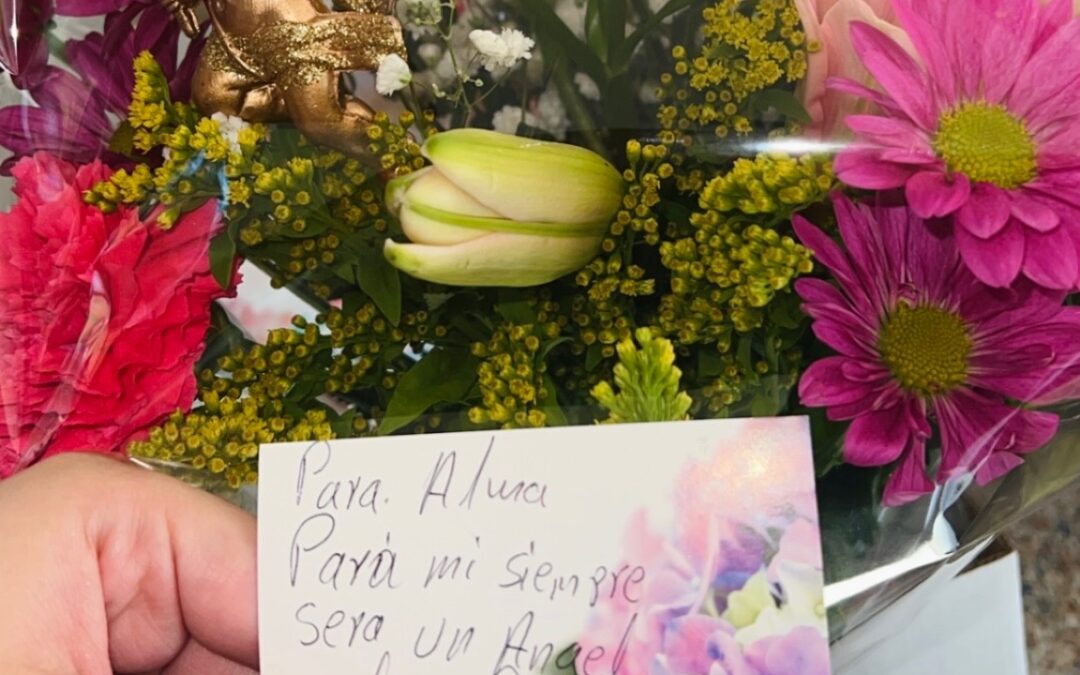
by Alma Calderón | Aug 28, 2026 | Recent Posts
“Vulnerability sounds like truth and feels like courage. Truth and courage aren’t always comfortable, but they’re never weaknesses.”
– Brené Brown
Last week, I was told by my coworker that I am “dependable no matter what”. We were having a horrible day, but we were doing the best we could with our limited budget. We work with children from low-income families, so it’s especially difficult when we can’t afford to take trips, the weather ruins our plans, and, honestly, the entire day just sucked. I smiled as the comment was kind and part of me was proud that someone had put their trust in me.
What she did not realize was the fact that I was exhausted and anxious since I had to listen to painful experiences that afternoon that made our day “difficult.” Yet while something within me was pleading to take a break, I had remained focused.
When an individual perseveres in the face of challenging situations, people tend to refer to the person as “strong”. Initially, the description is comforting as it implies bravery, adulthood and dependability. Strength, however, with time can be a part of a role that other people expect you to always adhere to. Therefore, it may seem disappointing to them to realize that you are not coping well once they think that you are capable of doing it.
The pressure feels greater whilst studying social work since the profession demands us to be present when we are involved in painful conversations. Clients can discuss grief, trauma, poverty, violence, family conflict or systems that have failed them over and over again. They require listening and emotional protection especially when they are in an environment that seems to be unstable. Being able to compose yourself is important, but it’s equally important to remember you’re not emotionally invulnerable.
I am able to maintain proper boundaries and still be left feeling sad, angry, helpless or upset at the end of an interaction. However, I do not feel those reactions make me unprepared to practice or unable to assist another human being. They help me to remember that I am a human being and I am influenced by the realities I see. Nevertheless, I question whether being able to confess that the work is heavy makes me less competent than someone who doesn’t express those feelings.
This pressure is more difficult when you have to be responsible in many different aspects of life. As I tend to deal with what other people throw at me and stay calm, friends and family might think that I am coping very well. But I feel that this strength may eventually become not so much of a personal attribute but a performance for others.
On one of the most challenging days, my supervisor had a matter of urgency and went home early leaving me fully in charge. That left me the responsibility of confronting a parent about child abuse allegations that their children had mentioned earlier in the day. Externally, I composed myself and assured all the staff that I would be fine. Soon after, I stepped away from the kids when I received a call from my doctor saying they needed to move my appointment up because the doctor needs to talk to me sooner. No other information allowed to be given over the phone. I hung up and began to cry until a coworker saw me. Side note: there’s absolutely no privacy when you work with children because no locked doors are allowed! Anyway, I immediately dried my tears and continued doing my job.
I did not say a word since I thought responsible individuals ought to decrease the pressure on others, not increase it.
The experience demonstrated to me how pain can be concealed easily even to those who care. It also left me wondering why it is that seeking support may be more terrifying than preserving our image and being overburdened. It leaves me with the question: What are we protecting when we make sure that no one notices when we are in trouble? We may be guarding an image of ourselves which has become unsustainable.
Unspoken stresses do not fade away since I continue tasks and meet expectations. It tends to manifest itself as fatigue, loss of patience, inability to concentrate and being unable to be around others. Even small tasks may be burdensome after a number of stressful days. I can end up being silent among friends, forgetful of what I’ve been reading or even repeating conversations in my head whilst I should be sleeping.
At one point, I wanted to inform my supervisor that I was emotionally overwhelmed. However, I was reluctant to do so; I was scared of being perceived as unprepared and felt that seeking assistance would result in their loss of trust in me. So I kept working, ignoring what I felt.
I have started to learn that the meaning of strength is self-understanding and not silent suffering. Because a healthy strength entails limits, rest, contemplation, and the bravery to seek assistance before stress turns unhealthy.
However this understanding doesn’t mean that change comes quickly. I’m starting slow. I’m now prioritizing journaling and rest in order to help me process feelings that cannot be resolved at the moment. These practices do not minimize my responsibility or erase hard experiences. Instead, they assist me to return with more patience, clarity and emotional stability. Self-care is responsible practice; it influences the way I listen and react.
Perhaps strength is not the power to tote everything without feeling the strain. Perhaps it is realizing that the weight is too heavy and that multiple people can bear it when they work together. Professionalism and vulnerability can co-exist with emotions managed in a wise and reasonable manner. This lens helps my brain understand that assistance is not a sign of failure, but actually a responsible action.
I hear both praise and a warning when I recall that my coworker referred to me as dependable. I cherish the trait of reliability and I would like to be perceived as being stable when times are hard. But reliability must not entail self-abandonment or hiding one’s emotional pain. Awareness of our limitations can help us to make care more sustainable, authentic, and caring. There are times when the wisest thing that we can do is to admit that we were not meant to do it all by ourselves.
by Alma Calderón | Jul 15, 2026 | Recent Posts
“Compassion is not a relationship between the healer and the wounded. It’s a relationship between equals.” – Brené Brown
There’s a saying in social work that is so common and maybe you’ve heard it too—maybe even more than once:
“You have to disconnect when you leave work. That’s the only way you’ll survive in this field.”
I’ve heard this from professors, from supervisors, from other social workers who’ve been doing this for decades. And I get it. I really do. The message behind it is important: If you carry everyone else’s pain home with you, you will destroy yourself. You need boundaries. You need space to breathe. You need to protect your own mental health.
But still – every time I hear the word “disconnect,” it lands wrong. It feels cold. Mechanical. Almost like it’s asking me to shut off a part of myself. And honestly, that’s never been who I am. I feel things. Deeply. Even before I chose this profession, I was always someone who absorbed other people’s energy. Who felt anxious when a loved one was anxious. Who cried when someone else cried – even if I didn’t fully understand what was wrong.
Now, as a social worker in training, that trait is both a strength and a challenge. It allows me to be present, to listen closely, to offer genuine empathy. But it also means that after a long day of hearing hard things – stories of trauma, grief, violence, injustice – I sometimes carry those stories home with me, like invisible weights I can’t shake off.
And that’s the part people warn you about. That’s what they mean when they say disconnect. But here’s where I struggle: I don’t want to become someone who can just listen to someone else’s pain and then shrug it off by the time I reach my front door. I don’t want to be numb. I don’t want to lose the part of me that feels. Because that’s the part of me that led me here in the first place.
Still, I understand the fear behind not drawing that line. This work can get to you. It can make the world feel like a dark place, especially when you’re exposed to so many of its cracks. There have been days where I’ve walked out of a session or a group and thought: How does anyone keep going? How do people survive so much pain? And how do I hold it without letting it harden me?
Because that’s the other piece of this – when you hear so many stories of injustice, of cruelty, of systems failing again and again, it gets easy to spiral into hopelessness. You start to feel like maybe things don’t change. That maybe the world is just broken. That maybe we’re just putting Band-Aids on bullet wounds.
That’s when I know I need to check in with myself.
What I’ve come to realize is that “disconnecting” doesn’t necessarily mean not caring. It doesn’t have to mean switching off your empathy like a light switch when you get home. Maybe what people actually mean is re-centering. Grounding. Coming back to yourself after you’ve spent the day holding space for others.
It’s the difference between saying, “I’m not going to feel this,” versus saying, “I am feeling this, but I’m going to tend to it.”
Because yes, this work can break your heart. But it can also teach you about resilience in ways that nothing else does. I’ve seen clients who have been through unthinkable things and still show up, still try, still hope. That’s what keeps me going. That’s what reminds me that even in the darkest moments, people still find light.
But we can’t hold their pain and our own without tending to ourselves in real, deliberate ways. That’s where the idea of integration comes in – not disconnecting, but creating a ritual of return. For me, that might mean journaling after a hard day. Or talking to someone I trust – not about the details of the session, but about the feeling it left me with. Sometimes it means lighting a candle and sitting with my thoughts in silence. Sometimes it means blasting music and dancing around like a maniac just to shake the heaviness out of my body.
And sometimes, if I’m honest, it means crying. That’s okay too.
We are not therapists, counselors, advocates, or caseworkers in a vacuum. We’re people. And while we’re trained to understand transference and countertransference, and how our own history shapes our reactions, the reality is that this job is deeply relational. We are affected because we connect. That’s the whole point.
In my last blog post – When Work Hits Home: Identifying with the Client – I wrote about what happens when your clients’ experiences hit too close to your own. I shared how difficult it’s been to work with immigrant families as a Latina woman while deportations in the U.S. continue to rise, and how that work doesn’t just stay in the office – it walks home with me. It lives in the same room as my personal fears and my reality.
What I didn’t say then, but what I’ll say now, is this: I don’t think we’re meant to carry it all alone. We need supervision, yes. But we also need community. We need spaces where we can say “I’m not okay” and not be seen as weak. We need to normalize the fact that sitting with someone else’s trauma changes you. That sometimes it opens your heart, and sometimes it wrecks you a little. That both are true.
What I’m really trying to avoid is becoming someone who stops feeling. I don’t want to lose my softness. I don’t want to get so good at creating emotional distance that I forget what it means to actually care – really, fully care.
Maybe the real question isn’t really “How do I disconnect?” but rather “How do I stay connected without feeling overwhelmed?” How can I keep my heart open while still protecting it from getting hurt every time I come across something painful?
I won’t act like I have all the answers figured out; I’m still on this journey. But here’s what I’ve come to understand:
I don’t want to shut myself off just to fit into a “professional” mold.
I don’t want to become numb or cynical.
I don’t want to lose faith in hope – or in people.
What I truly want is to keep showing up with compassion, to set strong boundaries, and to allow space for grace – for others and for myself.I want to stay emotionally present without burning myself out. And I want to keep reminding myself (and others) that this work is tough, and it’s okay to admit that.
So no, I’m not going to disconnect. Not in the way people mean. But I am going to care for the parts of me that get tired. I’m going to keep finding ways to come back to myself after the storm. And I’m going to keep believing that staying tender in a world like this is one of the bravest things we can do.
Amy’s response to “How Do You Care Without Carrying It All”
I’m not sure that anyone wants us/you to disconnect completely as in not feeling with the client; not empathizing, being “cold” or not caring. Yes, we are human! And we need to allow ourselves more room to be so, even when with our clients. It’s ok to cry with our clients (as long as you’re still in control of your emotions). It’s ok to get frustrated. It’s ok to use yourself to help others mend and that may look different from client to client. It’s also ok to let it go after you meet with the client. That doesn’t mean you don’t care. And that becomes easier in time, and with more experience.
We also have to self-protect as a form of self-preservation and subsequently in the service to others. I often feel like we become so conditioned to hardship that we don’t react anymore. For example, it seems if you watch local news all you hear about is the baby who fell out of the apartment window; the family who lost their home to a fire; the boy who accidentally shot his brother. And we gasp in horror for a moment and carry on as usual, maybe even starting to prepare dinner. Are we cold? Are we not caring? We are self-protective. This applies to world news as well – there are really horrific devastating global crises. We’re seeing raw footage of war, climate disasters, and injustices… daily. And yet, we must go on. Some of us refuse to watch the news; others watch it and get depressed; and others feel, learn and act because of it. It’s human nature. We all have different mechanisms to self-protect.
I do believe in building community. I do believe in finding support. I don’t believe it’s weak to show your feelings – it’s actually quite strong. I don’t think we should equate disconnection with not caring and I believe there is a roomy spectrum between not caring and not always feeling. What we learn in this field is to be present. In the moment. And then store the feelings away so you can live your life. We aren’t in the business of sacrificing ourselves for the good of others, though it can certainly feel that way at the beginning!
by Alma Calderón | Apr 22, 2026 | Recent Posts
“If you feel pain, you are alive. If you feel other people’s pain, you are a human being.” – Leo Tolstoy
There’s something I’ve been sitting with lately that feels heavy, and I imagine I’m not the only one. As social workers (or future social workers), we’re trained to hold space for other people’s pain, but sometimes, we forget to mention how deeply jarring it can be when clients’ stories mirror your own. Alternatively, it can also look like when the issues you’re helping them navigate are the same ones you’re facing in your own life. I’m not yet a professional social worker. I’m still getting things together—learning policies, ethics, frameworks. Nevertheless, what no textbook can prepare me for is the emotional whiplash of holding someone’s trauma in one hand while your own sits unresolved in the other.
For me, that trauma is heightened due to the recent issues in the United States deeply tied to immigration and xenophobia. I work with immigrant clients, nearly all of whom are Latinx. I tell myself that their stories of fear, displacement, separation, racism, xenophobia, and survival should not feel this personal—and yet, they do. As a Latina woman, I don’t just listen to their stories; I feel them as if I have lived them. I see my family. I see my friends. I see myself. And in recent months, with the increase in deportations and the intensifying dehumanizing narrative in the name of “border security,” these conversations feel like they’re personal attacks.
There are days I leave work and go home just to talk about the same topics again with my mother and father over dinner—except this time, it’s not with a client. It’s personal. My loved ones are scared. My loved ones are suffering. And when I walk into work the next day, I find myself needing time before opening the door to meet with clients who are holding that same fear.
I’ve been taught about countertransference—how our personal history can sneak into the therapeutic space. And I know transference is a thing, too—how clients can project onto us, often without realizing it. But I’m not sure what to call it when it goes both ways. When a client reminds you of someone you love or of a story you just swear is taken straight from your life. When you find yourself fighting away sadness because you’re not just empathizing with the other person—you’re reliving. What do you do when a client’s story activates something in you that hasn’t healed yet?
I find myself questioning: Am I being “too much” if I feel so strongly? Am I fit for social work if I sometimes leave work rattled? I’ve even caught myself feeling shame—like I’m doing something wrong by being emotional. But the truth is, I’m human. And social work never asked me to be anything else. It only asked me to be aware of my reactions and to care enough to explore them.
I still think the line is blurry. When the world feels unsafe for people like me—and I don’t just mean the “people I serve”—where does the work end, and where do I begin? I’m starting to realize that the answer isn’t to draw a clear boundary between “self” and “social worker,” but rather to practice an ongoing self-attunement.
What I mean is this: I’ve been trying to notice when that barbed wire feeling in my throat occurs during sessions. When my shoulders rise. When my voice falters. I’m learning to name it. “I feel overwhelmed,” I might think. Or “This reminds me of people I love.” I don’t say it out loud during work, but acknowledging it to myself helps me stay grounded.
And outside of work? That’s the other half of social work—how do I care for myself when my community is hurting? When my people are hurting? To be transparent, I don’t have a complete answer. I’m still figuring it out. But here are a few things I’ve been practicing:
Unplugging from the news when it’s too much. I want to stay informed. I am committed to staying informed. But doomscrolling myself into panic or numbness doesn’t help anyone—not my clients, not my family, not me.
Letting myself feel without judgment. I’m allowed to grieve. To be angry. To be scared. I don’t need to be emotionless to help others. I need to be honest, and that starts with myself first.
Reaching out to social work students/professionals who get it. Sometimes, just hearing “me too” or “I feel similarly” from someone else in the field reminds me they’re human—as am I.
Making space for joy. This might sound strange in a blog about personal issues and emotional overload. However, being joyful is resistance and allows us to fight against injustice with a clearer mind.
Seeking supervision when something sticks. A major lesson I learned is that not everything needs to be processed alone. Sometimes, supervision isn’t just about learning how to “handle” clients—it’s also about mutual support and comradery.
I need to re-emphasize that there are no easy answers here. I’m not writing this blog as a “5 Steps to Save Yourself from Client Pain” checklist. I’m writing because maybe you’ve felt this too—especially if you share an identity, a background, or a trauma with the people you serve.
Maybe you’re also wondering how to separate your work from your life when the issues aren’t just concepts—they’re personal, persistent, and painful.
Maybe you’re also holding it all, the way so many of us do—quietly because it feels too complicated to explain. Or because you feel ashamed you’re struggling when you’re “supposed” to help people when they’re struggling.
Here’s what I’m starting to believe:
This work will keep asking us to show up—with our hearts, our stories, our boundaries, and our breath. But we are not machines. We are not containers for other people’s pain. We can’t just swallow the pain and completely dissolve it. We are human. And that humanness? It’s a gift.
So if you, like me, feel you’re in the thick of it right now—if you’re holding a pain that doesn’t just belong to your clients but to your family, your community, your own childhood—know that you are seen. I’m with you.